Retatrutide - The Triple Agonist

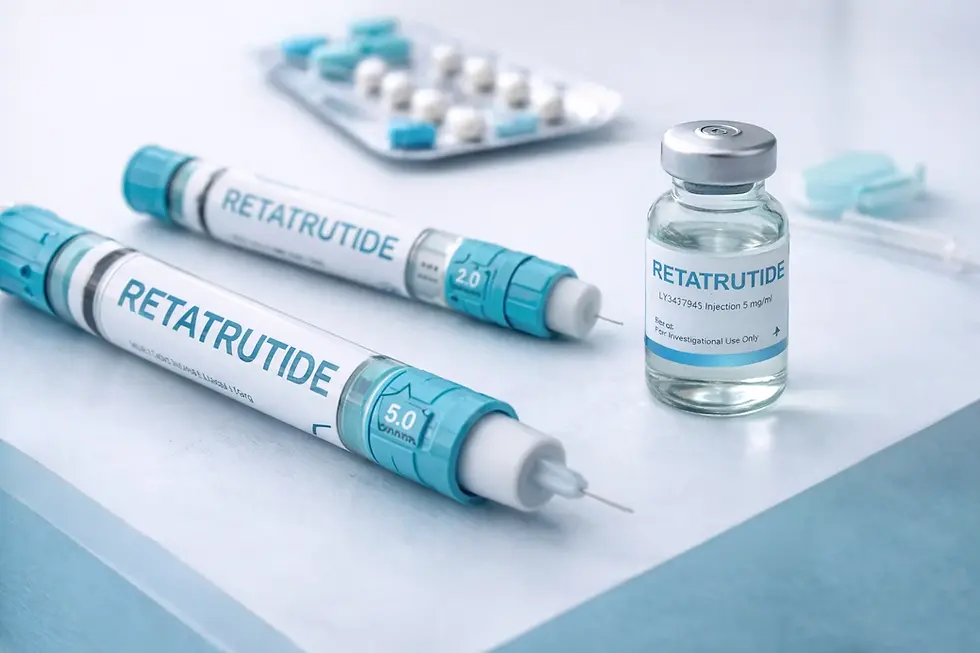
Why is Retatrutide not part of our Peptide/GLP-1 List:
1. It’s Still in Clinical Trials
Retatrutide is still in Phase 3 trials globally.
Until those trials are completed,
and safety + long-term data are confirmed,
It cannot be approved by the TGA as it has not completed clinical trials globally
Australia doesn’t approve drugs early just because there’s hype — it follows full regulatory pathways.
2. TGA Approval Process Takes Time
Even after Phase 3:
The sponsor (Eli Lilly) must submit to the TGA
The TGA reviews:
Safety
Efficacy
Quality manufacturing
This can take 12–24+ months
So even in a best-case scenario, you’re looking at a delay after trials finish.
3. Safety Profile Still Under Review
Retatrutide is a triple agonist (GLP-1, GIP, glucagon) — more complex than Ozempic or Mounjaro.
That means regulators are watching closely for:
Cardiovascular effects
Metabolic impacts
Long-term safety
Adverse events at higher doses
The more potent the drug → the more scrutiny.
4. Pharmaceutical Strategy & Market Control
Even if approved globally:
Pharma companies don’t always prioritise Australia first
They often launch in:
USA
Europe
Then expand later
Australia is a smaller market, so rollout can lag
5. Access Pathways in Australia Are Strict
Even before full approval:
Access would likely be limited to:
Clinical trials
Special Access Scheme (SAS-B)
And only under strict prescribing frameworks
6. Compounding & Legal Restrictions
This is important for your space:
You cannot legally compound or supply unapproved substances freely
The TGA is increasingly tightening control around:
Peptides
Weight loss injectables
Off-label promotion
So even if there’s demand, it can’t just enter the market informally.
It has been stated that Retatrutide will never be available here in Australia legally because of our strict regulations.
It is NOT available anywhere globally in a legal framework at all - clinical trials will be completed in the United States at the end (maybe) of 2028 for countries like the USA & Europe first.
Why People Want Retatrutide
1. Significant Weight Loss Outcomes (Early Data)
In Phase 2 trials, participants achieved:
~20–24% average weight loss at higher doses over ~48 weeks
That’s:
Comparable to (or exceeding) current GLP-1s like semaglutide
Approaching outcomes seen with bariatric surgery in some cases
2. Triple Mechanism = Broader Metabolic Impact
Retatrutide is a triple agonist:
GLP-1 → appetite suppression, slowed gastric emptying
GIP → insulin regulation, metabolic effects
Glucagon receptor → increases energy expenditure (fat burning)
That third pathway (glucagon) is what makes it different — it may:
Increase calorie burn
Improve fat metabolism
Potentially enhance liver fat reduction
3. Potential Benefits Beyond Weight Loss
Early research suggests possible improvements in:
Insulin sensitivity
Type 2 diabetes markers
Fatty liver disease (MASLD/NAFLD)
Cardiometabolic risk factors
This positions it as a metabolic therapy, not just a weight loss drug.
4. Faster or More Profound Results
Some participants in trials:
Continued losing weight beyond 1 year
Had sustained reductions without plateauing early
That’s driving a lot of the hype.
Where It’s Being Trialed
Retatrutide is currently in global Phase 3 clinical trials.
Trial Locations Include:
United States
Europe (multiple countries)
Asia
Australia (select sites may be involved depending on the trial arm)
These are multinational, multicentre trials, which is standard for large pharmaceutical studies.
Who Is Running the Trials
Retatrutide is being developed and trialled by:
Eli Lilly and Company
Same pharmaceutical company behind:
Mounjaro (tirzepatide)
Zepbound
They are one of the global leaders in:
Diabetes
Obesity
Metabolic disease therapeutics
What Phase It’s In Now
Completed: Phase 2 trials (very strong results)
Current: Phase 3 trials (ongoing)
Phase 3 is the final stage before regulatory submission and involves:
Larger populations
Longer durations
More detailed safety monitoring
Important Clinical Reality Check
There’s a reason for caution despite the hype:
Long-term safety is still unknown
Glucagon activation can have complex metabolic effects
Higher potency = higher need for clinical oversight
Dropout rates and tolerability still matter
WARNING
So if you buy it, it is definately black market, we can promise you that - be careful, you don't know where it is from, how it was made or what is in it!


Comments